ICP Development
ICPs built on generic enrichment data and inconsistent account quality rarely translate into real efficiency gains.
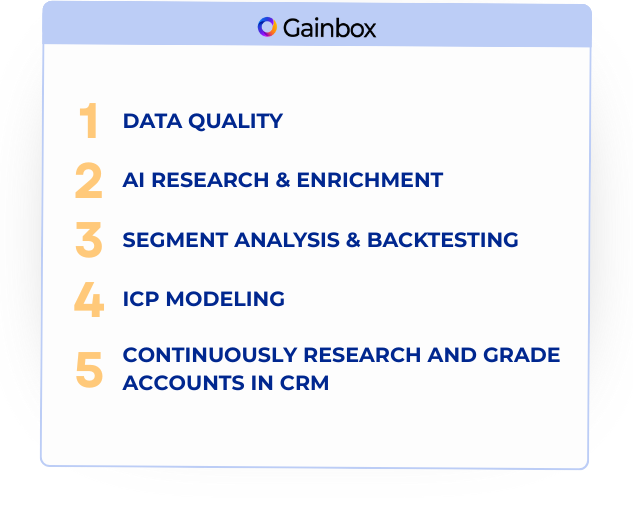
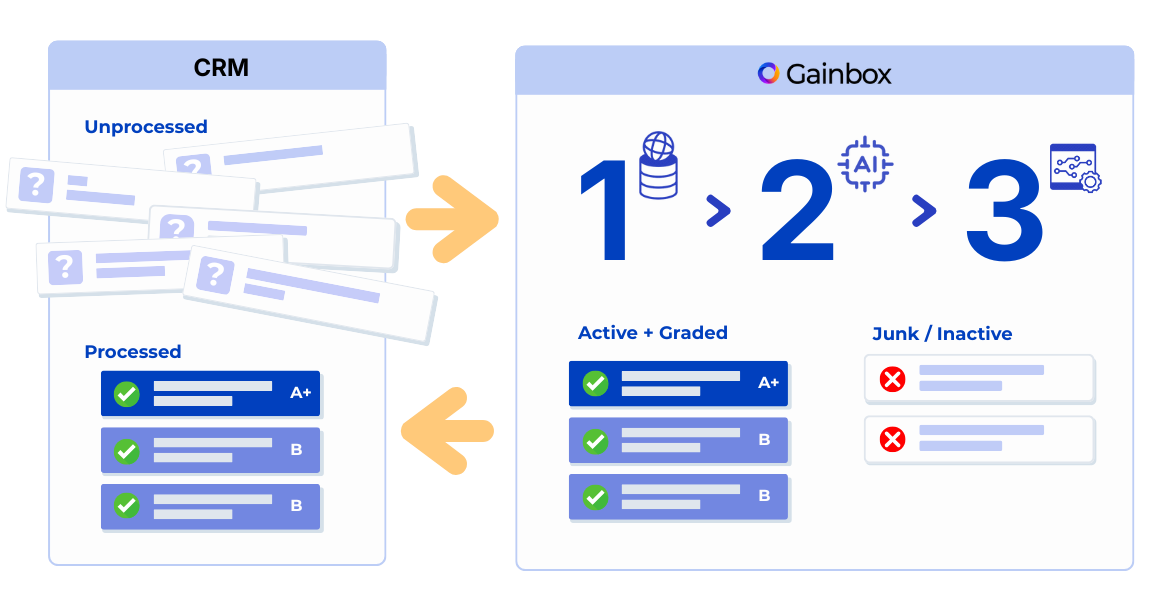
Gainbox enables use-case based ICPs by validating every account, applying accurate industry classification, and enriching accounts with product- and GTM-specific signals drawn from how companies describe themselves. This allows teams to analyze and backtest ICP definitions against real performance, making it possible to operationalize ICPs grounded in buying context rather than static firmographics.
Step one
Data quality
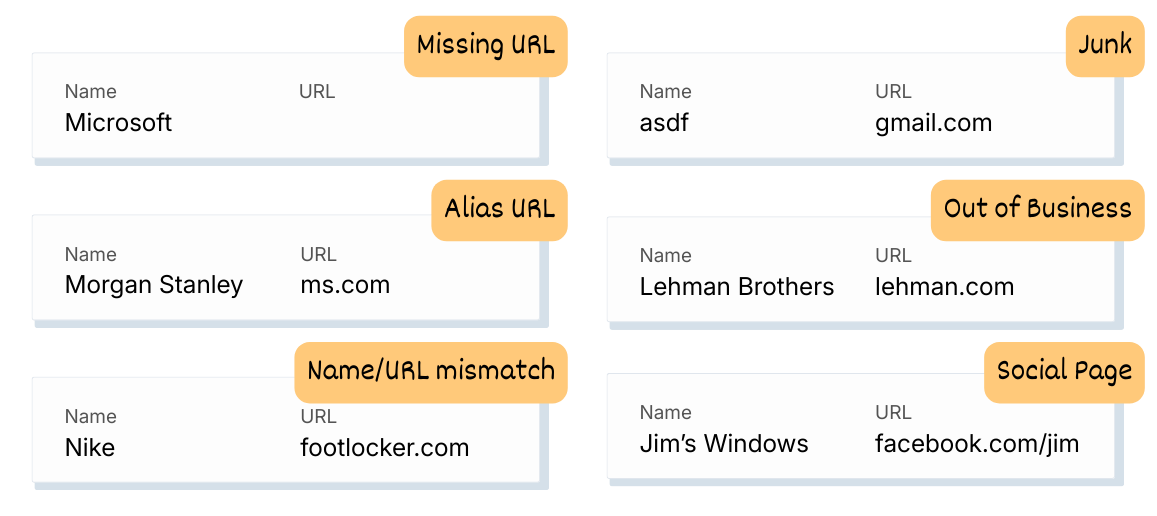
Any ICP development effort should start by identifying and fixing data quality issues. Since most account enrichment depends on the website URL, having this field accurate and consistent is essential to avoid compounding errors throughout the ICP process.
Next, we normalize your firmographic data. As account records accumulate data from multiple sources over time, values often become inconsistent or conflicting, with industry being a common problem area. Whether you use a standard taxonomy like NAICS or a custom industry framework, Gainbox brings those fields into a consistent, reliable structure.
Step two
AI Research & Enrichment
Use Gainbox's AI Research Agents to enrich accounts with signals specific to your product and GTM motion. This shifts targeting beyond firmographics and allows teams to prioritize accounts based on concrete use cases and precise indicators.

Step three
Segment Analysis & Backtesting
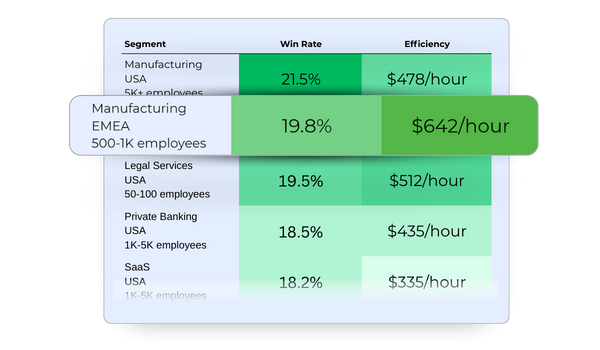
Defining an ICP is only useful if it holds up against real performance. Gainbox lets you analyze how different segments perform across multiple dimensions, making it easy to compare segments side by side and surface patterns grounded in actual outcomes rather than assumptions.
With built-in backtesting, teams can test proposed ICP definitions against historical data to understand how those accounts have performed over time. This enables teams to refine segments, validate hypotheses, and confidently operationalize ICPs based on evidence rather than intuition or static firmographics.
Step four
ICP Modeling
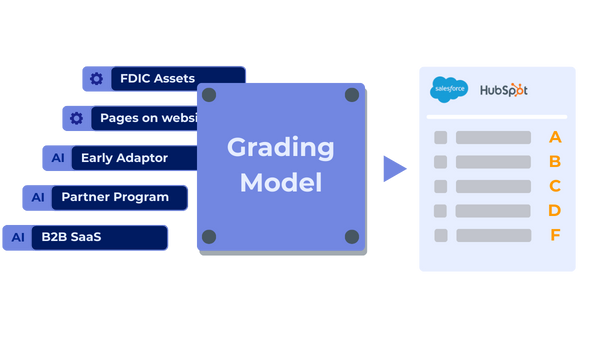
Gainbox's flexible grading models let teams combine multiple signals into a single, consistent view of account fit. Teams can create as many grading models as needed to support different products, use cases, or GTM motions, while keeping the underlying complexity contained within each model.
Grades are pushed directly into your CRM, where they can be used for prioritization, territory planning, and reporting without manual research or switching tools. By integrating ICP grades into the reports teams already rely on, Gainbox adds a new dimension to pipeline reviews, expansion discussions, and account planning, helping teams focus on the most relevant accounts with the right message.
Step five
Keep the CRM up-to-date
Markets change, and so do the accounts within them. Gainbox continuously researches both existing and newly added accounts to keep underlying signals and ICP grades aligned with how companies evolve over time.
As new information becomes available, accounts are re-evaluated against your grading models. To avoid grades changing unexpectedly, Gainbox includes a publishing system that lets teams control when updated grades are pushed to the CRM. Grades can be reviewed and intentionally republished in connection with territory planning or other planning cycles, ensuring prioritization and reporting remain stable and predictable while still staying up to date.
Have a challenge for us?
Let's book a 30-minute introductory meeting to explore your data or ICP challenges and see if Gainbox is the right fit.